






Cloud Computing Chaos: How the Global AWS Outage Stalled the Engines of Motorsports
A widespread global outage of Amazon Web Services (AWS) on Monday morning sent a shockwave across the digital landscape, impacting everything from major social media platforms and banking apps to video games. While many users felt the frustration of a stalled online world, the motorsports industry, which increasingly relies on cloud computing for everything from fan engagement to on-track performance analysis, also felt the disruptive force of the cloud’s collapse.
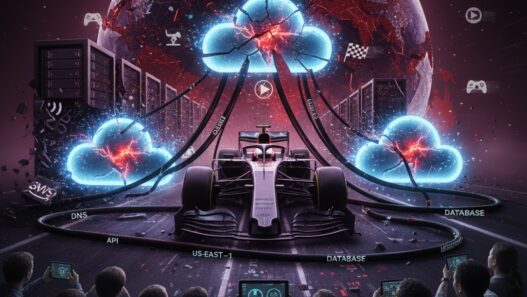
The disruption, which Amazon attributed to issues related to its domain name system (DNS) in the critical US-EAST-1 region, affected a massive portion of the internet’s infrastructure, proving once again how reliant modern life is on a handful of tech giants.
The Digital Pit Stop: Motorsports Impacted
For fans and organizations within motorsports, the AWS disruption created a series of frustrating digital “pit stops.” While the impact was largely seen in online services rather than live trackside events, the ripple effect touched crucial areas of the sport:
- Fan Engagement and Streaming: Many racing series and teams rely on AWS for their official websites, video-on-demand services, and live streaming platforms. As services worldwide experienced “increased error rates and latencies,” access to exclusive content, race archives, and even live event streams for ongoing series was likely hampered for some time, souring the fan experience.
- Gaming and Sim Racing: The sim racing community, which often acts as a feeder and training ground for real-world motorsports, saw major platform disruption. The outage affected large-scale online games like Fortnite and Roblox, both of which are hosted on AWS. More importantly for motorsports, if any dedicated sim racing platforms or esports tournament organizers—especially those running major, public-facing competitions—rely on the affected AWS region for server infrastructure, their operations would have been thrown into chaos, leading to log-in failures and connectivity issues.
- Data Analysis and Strategy: Formula 1, in particular, has a high-profile, deep technical partnership with AWS, leveraging its machine learning and cloud capabilities to power the “F1 Insights” on-screen graphics for TV broadcasts. These graphics provide fans with real-time analysis on everything from driver strategy to car performance. While race days are meticulously planned to minimize reliance on external systems during the live event, the outage would have potentially impacted data ingestion, processing, and the ability to deploy new analytical models, slowing the “race against time” for crucial behind-the-scenes data.
- Operational Bottlenecks: Organizations like SRO Motorsports, which uses AWS to dramatically cut down on the time it takes to perform technical compliance checks (scrutineering) on race cars, would have seen their streamlined, data-driven systems slow or even fail. The inability to process logged vehicle data quickly and automatically against technical regulations would revert the process to its slow, manual format, creating operational bottlenecks during an already hectic race weekend.
A Stark Reminder of Interdependency
The event serves as a stark reminder of the global internet’s interdependency on a limited number of cloud providers. As one cybersecurity expert noted, when a core service like AWS—which underpins much of the digital world’s infrastructure—fails, the downstream effects are pervasive, making it difficult for users to pinpoint the root cause of their issues.
While Amazon’s engineers were “actively working” to resolve the problem and services showed “significant signs of recovery” within a few hours, the disruption highlights the vulnerabilities in modern sports and entertainment. For motorsports, which is rapidly accelerating its adoption of cloud technology for both performance and fan engagement, the AWS outage is a powerful lesson: diversification and robust backup plans for core digital operations are no longer optional—they are essential to keep the engines of the sport running, even when the cloud takes a sudden, global pit stop.